Real Estate Capital Stack Explained: Senior Debt, Mezzanine Financing, Preferred Equity and Common Equity in Real Estate Deals

Real estate investing is often viewed from the outside as a simple transaction. A property is purchased, renovated or operated and eventually sold for a profit. However, behind every successful real estate investment lies a sophisticated financial structure that determines how the project is funded and how profits are distributed.
This structure is known as the real estate capital stack. It represents the layers of capital used to finance a real estate deal. Each layer has a different level of risk, priority in repayment and potential return.
Understanding the capital stack is essential for investors, developers and anyone interested in real estate syndications or private equity real estate. The position an investor holds within the capital stack determines how quickly they are repaid, how much risk they carry and what type of returns they can expect.
In most real estate projects, the capital stack consists of four primary layers. Senior debt, mezzanine financing, preferred equity and common equity. These layers work together to finance a property acquisition or development while balancing risk between lenders and investors.
This guide explains how the real estate capital stack works, the purpose of each layer, and how risk and return change depending on where an investor sits within the structure.
What Is the Real Estate Capital Stack

The capital stack refers to the combination of funding sources used to finance a real estate project. Each source of capital occupies a different position in the stack and has different rights, repayment priorities and return expectations.
Think of the capital stack as a pyramid. The safest capital sits at the bottom while the highest risk capital sits at the top. The order also determines who gets paid first if something goes wrong.
Typical capital stack structure:
- Senior Debt
- Mezzanine Financing
- Preferred Equity
- Common Equity
The order matters because repayment priority follows the same sequence. Senior lenders are paid first. Equity investors are paid last but have the highest potential upside.
For developers and sponsors, structuring the capital stack correctly is essential. A well balanced stack lowers financing costs while attracting investors with different risk preferences.
Why the Capital Stack Matters in Real Estate Investing

The capital stack plays a critical role in real estate finance for several reasons.
Risk Distribution
Different layers allow risk to be distributed among multiple parties. Lenders accept lower risk and lower returns, while equity investors accept higher risk in exchange for greater profit potential.
Access to Larger Deals
Few sponsors can fund large real estate projects alone. Using multiple capital sources allows investors to participate in deals that would otherwise be too expensive.
Financial Flexibility
Different funding layers allow sponsors to structure deals in ways that improve returns and reduce the amount of capital required from the sponsor.
Investor Options
The capital stack provides multiple entry points for investors depending on their goals. Some investors prefer stable income while others prefer higher growth potential.
Understanding these layers helps investors evaluate deals more intelligently and choose opportunities aligned with their risk tolerance.
Layer 1: Senior Debt

Senior debt forms the foundation of the real estate capital stack. It is the primary loan used to finance the majority of a property purchase or development.
Senior loans are usually provided by banks, commercial lenders, insurance companies or large financial institutions.
Key Characteristics of Senior Debt
Senior debt typically covers 50 percent to 75 percent of the property value depending on the project type and lender requirements.
Key features include:
• Lowest risk position in the capital stack
• First priority for repayment
• Secured by the property itself
• Fixed or variable interest rates
• Lower return expectations compared to equity
If a project fails or a foreclosure occurs, the senior lender has the first claim on the property's assets and proceeds.
Typical Returns
Senior debt investors usually earn interest rates ranging from moderate to conservative levels compared to equity investments. Returns are generally predictable and based on loan payments rather than property appreciation.
Why Senior Debt Is Important
Senior debt reduces the amount of capital needed from investors and sponsors. Because lenders have strong collateral protection, they are willing to provide large amounts of capital at relatively lower cost.
For developers, senior debt is the most affordable layer of financing.
Layer 2: Mezzanine Financing
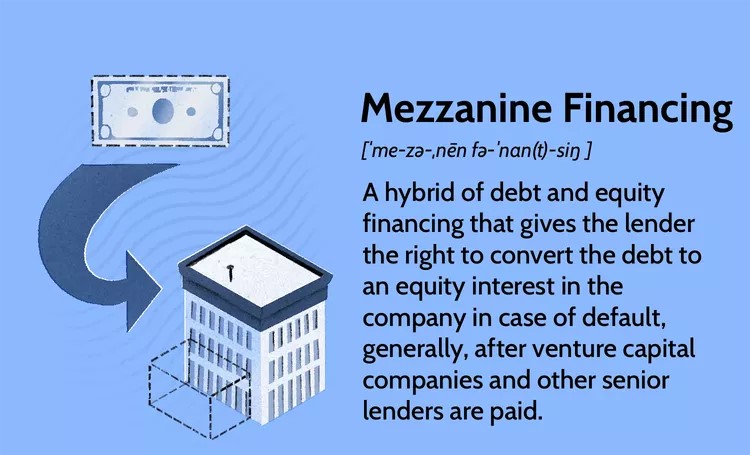
Mezzanine financing sits directly above senior debt in the capital stack. It is often used when a project requires additional funding beyond what the senior lender is willing to provide.
Mezzanine financing is considered a hybrid between debt and equity.
Key Characteristics of Mezzanine Financing
Mezzanine lenders accept higher risk compared to senior lenders. In return, they receive higher interest rates or profit participation.
Important features include:
• Second position behind senior debt
• Higher interest rates than senior loans
• Often unsecured or secured by equity interests
• May include equity participation rights
• Higher risk but higher return potential
In many deals, mezzanine lenders have the ability to take control of the ownership entity if the borrower defaults.
Typical Returns
Returns for mezzanine financing are generally higher than senior debt. They compensate investors for the increased risk of sitting behind the senior lender.
When Mezzanine Financing Is Used
Developers use mezzanine financing when they want to reduce the amount of equity required in a deal. By adding mezzanine capital, sponsors can increase leverage and potentially boost equity returns.
However, this also increases overall project risk if cash flow becomes insufficient to service debt obligations.
Layer 3: Preferred Equity
Preferred equity sits above mezzanine financing but below common equity in the capital stack. It represents equity capital that receives priority over common equity investors.
Preferred equity investors typically receive fixed or structured returns before common equity holders receive profits.
Key Characteristics of Preferred Equity
Preferred equity investors are technically owners rather than lenders, but they have priority rights within the equity structure.
Key features include:
• Higher priority than common equity
• Typically receives preferred returns
• Limited control over property decisions
• Higher returns than debt investments
• Lower risk than common equity
Preferred equity investors are usually focused on income stability rather than full participation in the upside.
Typical Returns
Preferred equity often receives a fixed preferred return before any profits are distributed to common equity investors.
For example, preferred investors might receive a structured return annually before any remaining profits are shared.
Why Sponsors Use Preferred Equity
Preferred equity allows developers to raise additional capital without increasing debt obligations. It can improve the financial stability of the project while still providing attractive returns for investors.
For investors, preferred equity offers a middle ground between the safety of debt and the upside of common equity.
Layer 4: Common Equity

Common equity sits at the very top of the capital stack. It carries the highest level of risk but also the highest potential return.
Common equity investors are the true owners of the property and participate fully in the profits after all other obligations are satisfied.
Key Characteristics of Common Equity
Common equity investors are typically sponsors, developers or limited partners in a real estate syndication.
Key features include:
• Last position in repayment priority
• Highest exposure to risk
• Full participation in property appreciation
• Receives remaining profits after other investors are paid
• Often includes decision making rights
Because common equity sits behind all other layers, it absorbs losses first if a project underperforms.
Typical Returns
Common equity returns depend heavily on the success of the project. When deals perform well, equity investors may achieve significantly higher returns compared to debt investors.
These returns typically come from:
• Rental income
• Property appreciation
• Sale profits
• Refinancing events
This upside potential is the reason many investors pursue equity positions despite the higher risk.
How Risk and Return Change Across the Capital Stack
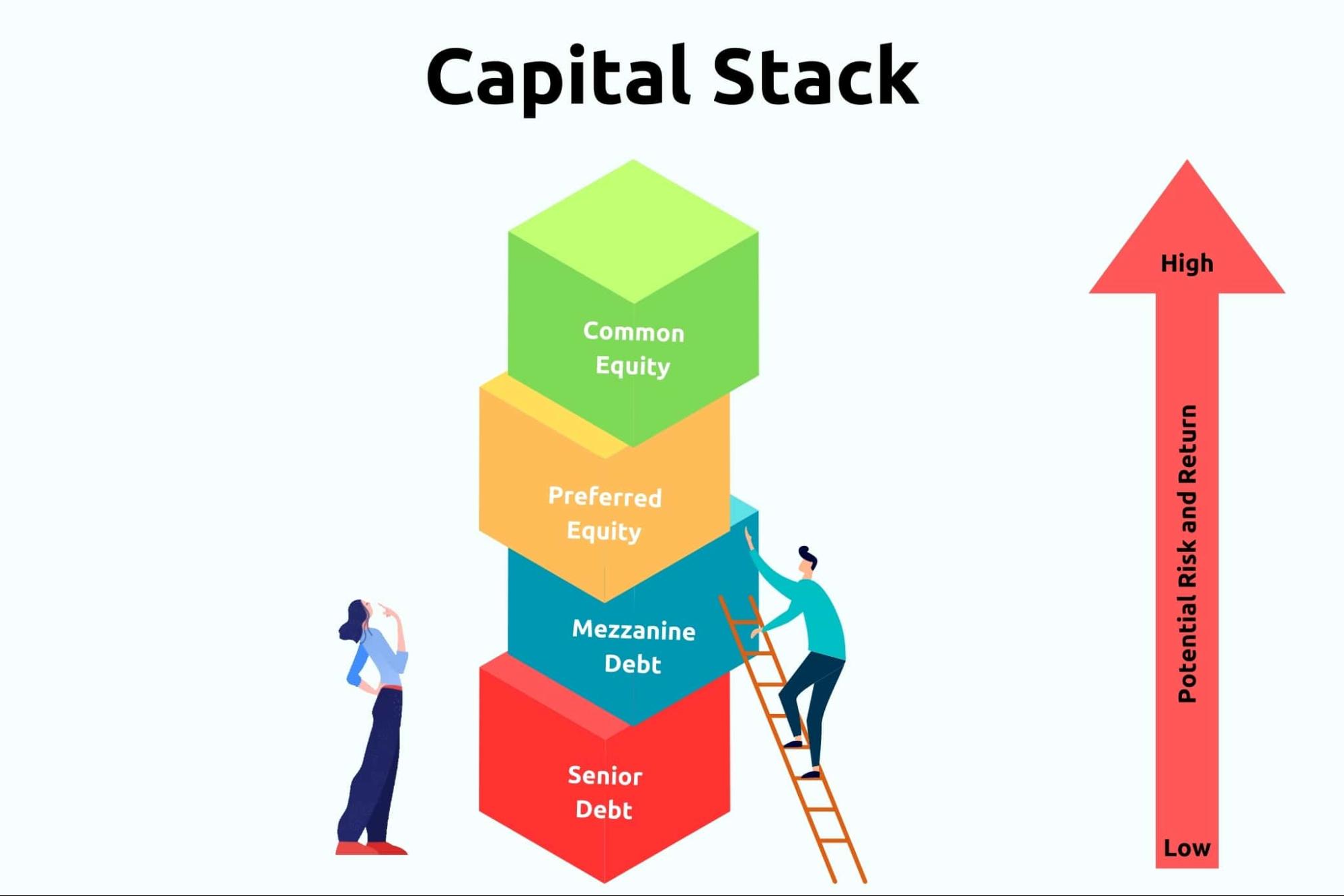
One of the most important concepts in real estate finance is the relationship between risk and return.
As you move higher in the capital stack, both risk and potential reward increase.
Lower Risk Layers
Senior debt represents the lowest risk investment because it is secured by the property and paid first. Returns are predictable but limited.
Moderate Risk Layers
Mezzanine financing and preferred equity offer higher returns but carry more risk because they are repaid after senior debt.
Higher Risk Layers
Common equity holds the greatest risk since it receives profits only after all other obligations are satisfied. However, it also has the greatest potential for profit if the property performs well.
This risk return relationship is why institutional investors diversify across multiple layers within the capital stack.
How Sponsors Structure the Capital Stack

Developers and sponsors carefully structure the capital stack to balance risk, cost and investor expectations.
A simplified example might look like this:
Senior Debt: 65 percent
Mezzanine Financing: 10 percent
Preferred Equity: 10 percent
Common Equity: 15 percent
This combination allows the sponsor to acquire a property with limited upfront capital while maintaining strong investor interest.
The exact structure varies depending on factors such as property type, project risk, lender requirements and market conditions.
How Investors Choose Their Position in the Capital Stack

Investors choose their position in the capital stack based on their investment goals.
Conservative Investors
Those seeking predictable income often prefer senior debt or preferred equity positions.
Balanced Investors
Investors comfortable with moderate risk may participate in mezzanine financing or preferred equity.
Growth Focused Investors
Those seeking higher long term returns typically invest in common equity.
The ability to choose between these layers is one reason real estate remains attractive to a wide range of investors.
Key Risks Investors Should Understand

While the capital stack helps organize financing, investors should still evaluate risks carefully.
Important factors include:
• Property market conditions
• Sponsor experience
• Loan terms and leverage levels
• Cash flow projections
• Exit strategy
Higher leverage through mezzanine financing or additional debt can increase returns but also increases downside risk.
Thorough due diligence remains essential for every investment.
Final Thoughts
Understanding the real estate capital stack is one of the most important skills for investors entering private real estate deals. Each layer of financing plays a unique role in balancing risk, capital availability and investment returns.
Senior debt provides stability and protection for lenders. Mezzanine financing offers additional leverage for sponsors. Preferred equity delivers structured returns with moderate risk. Common equity captures the full upside potential of a successful project.
By understanding how these layers interact, investors can make smarter decisions about where to place their capital and how to evaluate opportunities in the real estate market.
For sponsors and investors working with experienced real estate investment firms such as Prawdzik Capitals, a well structured capital stack helps create stronger deals, align investor interests and support sustainable long term growth in real estate portfolios.
When the capital stack is designed correctly, every layer plays a strategic role in turning a real estate project into a successful investment opportunity.